.jpg)
More and more food brands are considering the shift from conventional to organic. Demand for organic products is growing, consumers are reading labels more critically, and retailers are making space on the shelves. At Hanze Verkoop, we guide brands through this exact process. Not from a theoretical standpoint, but based on our own practical experience with organic brands, distribution, and retail introduction. In this article, we explain the steps actually required, the challenges you will face, and how to commercially justify the investment.
Why the shift to organic is a strategic choice
In 2023, Dutch consumers spent over 2 billion euros on organic products. That figure is rising annually, driven by a growing need for transparency regarding origin and production methods. At the same time, new EU sustainability legislation and packaging regulations are making it increasingly difficult for conventional brands to continue business as usual.
On a supermarket shelf where packaging and claims often look alike, an organic product truly makes a difference. The SKAL label is legally protected and gives your product a credible story that conventional competitors cannot simply copy. What we see with our own brands is that an organic positioning opens doors that remain closed to conventional brands. Follow the latest news and developments regarding organic food to stay informed about market opportunities.
The four main hurdles when switching to organic
The transition sounds attractive, but in practice, you will encounter four operational challenges. We recognize these obstacles from our own projects and know where brands lose the most time:
- Converting the raw material supply chain. Every ingredient must come from a SKAL-certified supplier. For our sauces, for example, this means that the mustard seeds and eggs must be organic. A single non-certified ingredient will block your entire product. Through our supplier network, we help brands map this chain quickly and completely.
- Adjusting recipes. Certain additives common in conventional products, such as synthetic emulsifiers, artificial colors, and some flavorings, are not permitted in organic production. This requires reformulation and new taste tests. We advise brands to be proactive in this area so they don't face surprises halfway through the process.
- Production with a certified partner. If your own factory is not SKAL-certified, you must switch to a producer that manufactures 100% organic products or can guarantee the separation between organic and conventional production streams. Through our extensive network of bio-certified production partners, you can find a suitable match faster and avoid a long search.
- Documentation and audit preparation. Supply chain traceability, a quality plan, and annual SKAL audits make up the administration. This part is structurally underestimated. We have done this ourselves with our brands and now help other brands with it, so the first SKAL audit doesn't come as a surprise. Check out the FAQ on starting with organic from SKAL for an initial overview of the requirements.
How does the SKAL certification process work?
Applying for organic certification involves five steps. You register with SKAL Biocontrole, submit a quality plan, undergo an admission audit, and receive your certificate upon approval. Annual inspections follow thereafter. The complete SKAL certification process for processors describes exactly which documents you need to prepare and what inspectors check. During our guidance, we ensure your documentation is in order before you begin the application process.
How the Hanze Route accelerates your organic transition
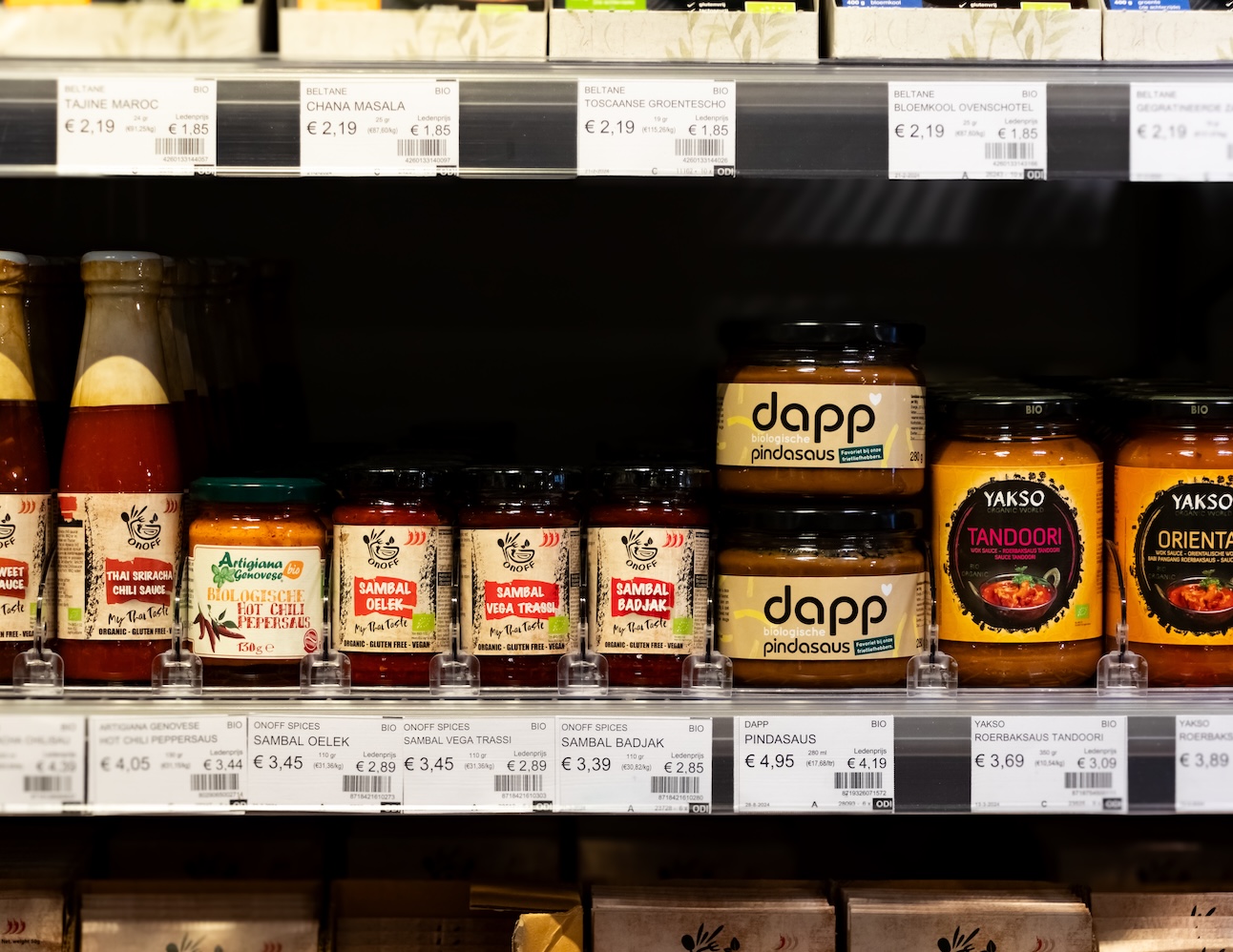
At Hanze Verkoop, we guide food producers through the entire journey, from the initial idea to listing on the organic shelf. With our own organic brand, Dapp Sauzen, we have gone through every step ourselves: sourcing, recipe development, SKAL documentation, and retail introduction. We apply that experience directly to the brands we support. We do this through our own process: the Hanze Route. The Hanze Route is our proprietary success formula that introduces your brand to the shelf and the consumer in 6 phases.
What sets us apart from a standard distributor is that we don't just step in when a product is ready for the shelf. We think along from the positioning phase: which retail channel suits this brand, what price point is realistic, and what story convinces a purchasing manager? Only when those questions are answered does an organic introduction have a chance of success.
Specifically, we help with:
- Sourcing of organic-certified ingredients through our supplier network
- Selection of suitable production partners
- Labeling, source documents, and GS1-EAN codes
- Positioning, brand story, and marketing strategy focused on organic retail
- Listing and distribution to organic retailers and independent organic stores
Our involvement in the 2025 World Fries Championship and the operation of our own fry shop also gives us direct consumer contact. We know what works on the shop floor and which products consumers actually pick up. Discover the Hanze Route for organic certification and distribution and see what the step-by-step plan for switching to organic looks like in practice.
Investment and return: what does switching to organic cost?
Let’s be honest: an organic transition is a serious investment. Count on a lead time of 6 to 12 months for reformulation, certification, and the first listing. Organic raw materials are on average 30 to 100 percent more expensive than conventional variants. On top of that, there are SKAL certification costs, administration, and adjusted logistics.
However, that cost increase doesn't have to squeeze your margins. An organic product justifies a higher consumer price, provided you tell the story behind it well. Retailers appreciate that approach because it strengthens their organic shelf. The key lies in how you position yourself: not more expensive, but more fairly produced and with a story that sells.
In our conversations with buyers, we notice that a strong brand story carries just as much weight as product specifications. That is why those who come to us for a bio-introduction are not just working on certification, but also on the commercial foundation that actually secures a listing.
Are you ready for the organic transition?
Switching from conventional to organic is challenging, but it builds a brand that will still be on the shelf five years from now. With Hanze Verkoop as your partner, you save time, avoid costly mistakes in certification and administration, and get onto the organic shelf faster and more effectively. We guide you through the entire process: from positioning and sourcing to distribution and listing.